
How to Prevent Subscription Churn on Shopify (2026): Where Subscribers Actually Leave
Short answer
Most Shopify subscription churn is decided before the customer reaches the cancel page. Split it into involuntary churn (failed payments) and voluntary churn, then work six levers: payment recovery, skip and swap, reason-matched cancel flows, the first three orders, the delivery experience, and early warning signals in your data. Fix failed payments first, because those customers wanted to stay.
Pull up everyone who cancelled last month. Now find the moment each of them actually checked out.
For most of them it wasn't the day they clicked cancel. It was two or three orders earlier, when something small went wrong and nobody noticed. A box turned up late. A charge landed at a bad time. A third bag of the same thing arrived before they'd finished the second. None of it was worth a complaint. It was just enough to start the clock.
By the time someone reaches your cancel page, the decision is usually made. The cancel button is where churn gets recorded, not where it happens.
So the work is upstream. This is a map of where churn starts on a Shopify subscription and what to do at each point. If you ship fresh or frozen product, our guides to delivery-first subscriptions and fresh product subscriptions go deeper on the delivery side. This post covers the whole picture.
Start with four numbers
Before changing anything, pull these. They tell you which of the six levers below matters most for your brand. If your subscription app can't give you them easily, that's a finding in itself.
| Number | Where to find it | What it tells you |
|---|---|---|
| Cancels in the last 90 days, split voluntary vs failed payment | Your subscription app's cancellation or billing report | Which half of the problem is bigger |
| The order number most subscribers cancel at | Cohort or retention report | Whether onboarding is where you leak |
| Your top three cancel reasons | Cancel flow survey answers | Whether your save offers match why people leave |
| Subscribers with two or more skips in a row | Subscription list filtered by skips | Who's likely to leave next |
Churn is two problems wearing one number
Your churn rate is hiding two different things, and they need different fixes.
Voluntary churn is someone choosing to leave. They cancel, or a skip quietly turns into an exit. This is about value, flexibility and timing.
Involuntary churn is someone leaving by accident. A card expires, a payment fails, the retries give up, and a customer who wanted to stay is gone without ever making a decision. Most brands report one blended churn number, so this side rarely gets looked at on its own.
That matters because you can spend months polishing your cancel flow and still lose subscribers out the involuntary side, where no flow ever runs. Fix the silent leak first.
1. Stop losing subscribers to failed payments
This is the cheapest churn to prevent because the customer already wants to stay. They're not unhappy. Their card just expired.
The fixes are boring and they work. Retry failed charges on a sensible schedule instead of giving up after one attempt. Email customers before a card expires, not after it fails. Make updating a card a two-tap job from that email, with no login wall in the way. Turn on automatic card updating where your payment setup supports it, so expired cards refresh on their own.
Recharge has solid dunning, and most established apps cover the basics. Whatever you're on, check every one of these is actually switched on. It's common to find at least one off. Recovered payments are revenue at almost no cost, so look here before you touch anything customer facing.
2. Let people skip and swap instead of cancel
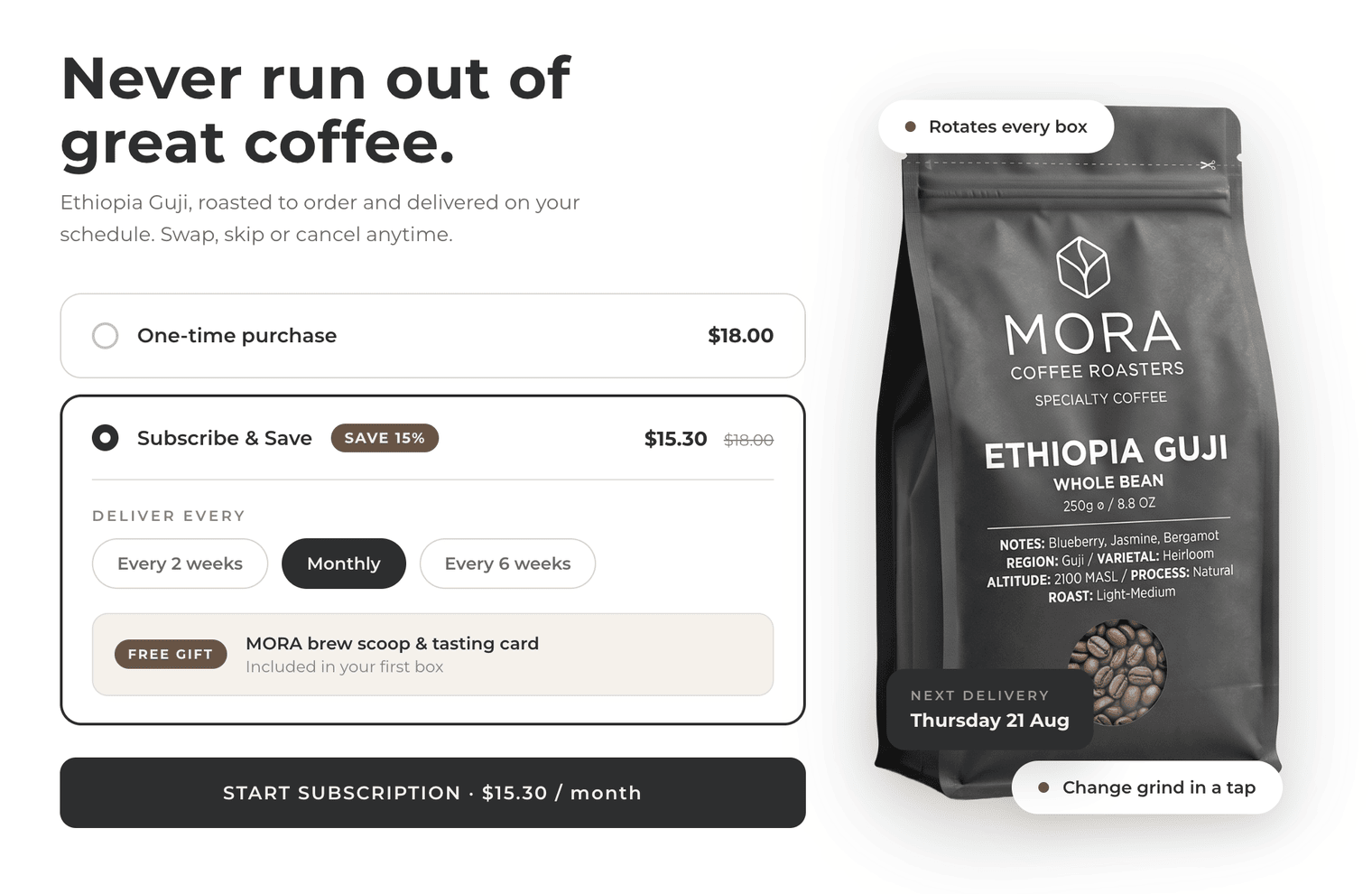
A customer with too much product doesn't think "I'll skip next month." They think "I've got too much, I'll cancel." Cancel is the blunt tool people reach for when the precise one is hidden.
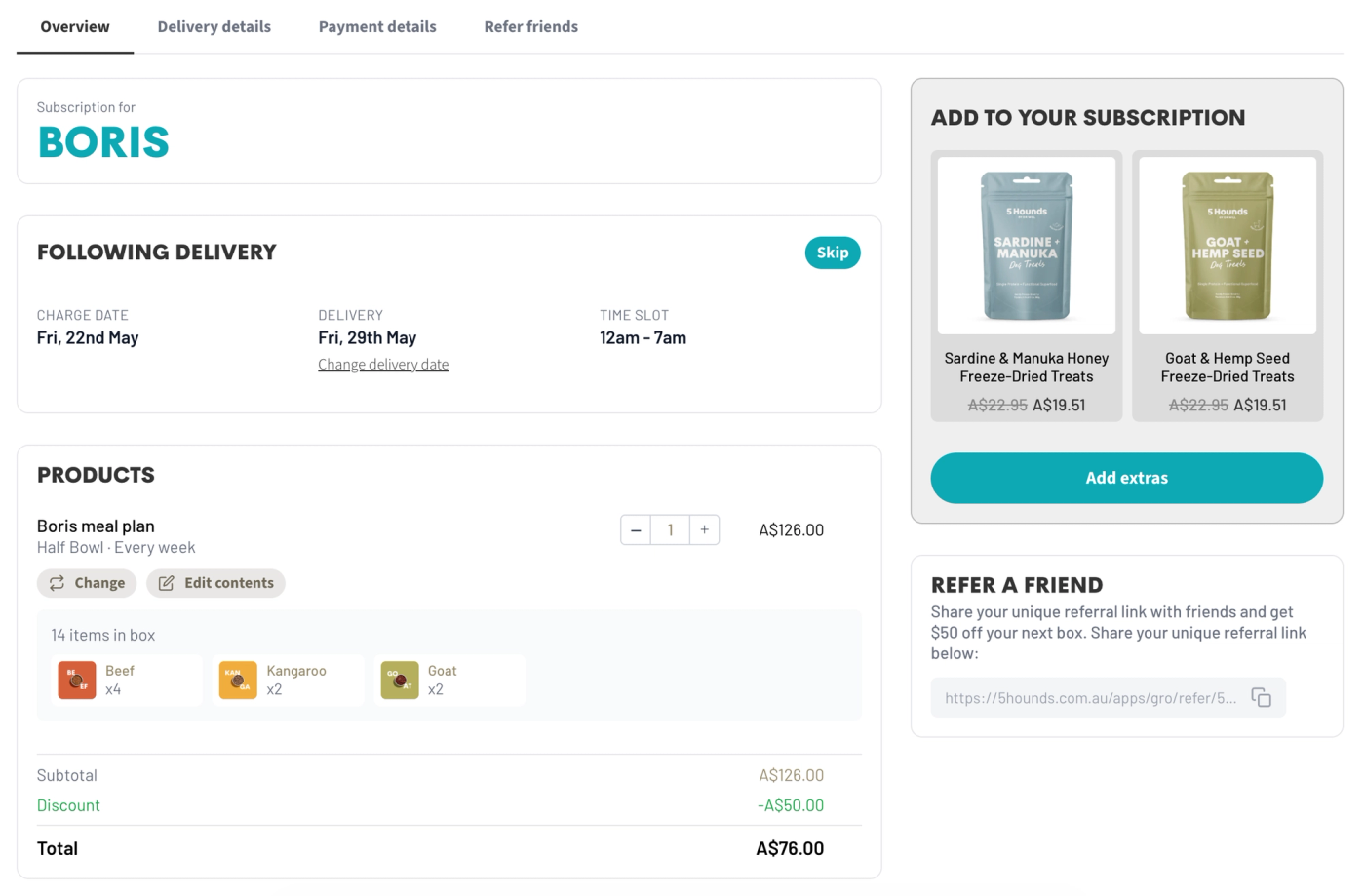
So put the precise tools where they can be seen. Skip the next order. Swap a product. Push the next order back a week or two. Change quantity or frequency. Each one is a save you didn't have to fight for, because the customer fixed their own problem instead of leaving.
The detail that matters most is being able to change one upcoming order without touching the whole subscription. A customer who skips one box is still a customer. One who couldn't find the skip button is gone.
3. Build a cancel flow that actually saves
When someone does reach the cancel page, the conversation isn't over. Most brands waste it by offering everyone the same thing, usually a blanket discount. A discount for someone leaving because they have too much product is the wrong offer. You've taught them to expect money off and you still haven't fixed the problem.
A flow that works asks why first, then matches the offer to the reason.
| Cancel reason | Offer that fits | Offer that backfires |
|---|---|---|
| Too much product | A skip, or a longer interval | A discount |
| Too expensive | A smaller plan or a discount | A skip |
| Going away | A pause with a set return date | Letting them cancel and hoping they come back |
| Didn't like a product | A swap to something else | A discount on the same thing |
| Bad experience | A real person who can fix it | Any automated offer |
Matching the offer to the reason saves more people and gives less margin away to people who would have stayed for a schedule change anyway. Read your cancel reasons every month too. If one keeps climbing, that's a product or ops problem the flow is only masking.
4. The first three orders decide most of it
Churn isn't spread evenly across a subscriber's life. It bunches up early, between the first and third order, before the habit has formed and while the customer is still deciding if this was a good idea.
That's where your effort belongs. A welcome that tells them exactly when orders arrive and how to change them. A reason to stick through order two, whether that's a small second-order incentive or simply the product turning up exactly as promised. A check-in after the first delivery that catches a problem while it's still fixable.
The four numbers you pulled earlier show where your own drop-off sits. If it's order two, a month-six loyalty campaign won't touch it.
5. A bad delivery is a churn event
This one hides because it looks like an ops problem. But for anyone shipping food, flowers, supplements or anything a customer is waiting for, the delivery is the product experience. A box that arrives warm, late or while nobody's home doesn't create a ticket and a shrug. It creates a cancel a few weeks later.
So the operational stuff is retention work. Tell customers before the box ships so they can be home. Let them move a delivery date as easily as they skip an order. Tell them when it's out for delivery and check it landed ok. Each step removes a reason to leave.
If you ship shelf-stable product on a steady cycle, this lever barely registers. If the day the box arrives matters, it's one of the most overlooked levers you have. Our post on fresh dog food subscriptions on Shopify shows what it looks like in practice.
6. See it coming
You can't fix churn you only learn about at the cancel screen. The signals are usually already in your data. Subscribers who've skipped two or three orders in a row are telling you something. A frequency that retains far worse than the others is a plan that doesn't fit. A drop-off at one specific order number points straight at where onboarding gives out.
Look at retention by cohort and by frequency, not as one blended number. That shows which group is quietly dragging down lifetime value while there's still time to reach them.
You don't need a data team for this. If your subscription data is reachable from an AI assistant, "which subscribers skipped twice in a row this month?" is a one-line question. We wrote up how that works in managing Shopify subscriptions from ChatGPT or Claude.
Where Gro fits
Gro is a Shopify subscription platform built by people who've run subscription billing, and it covers each of these levers in one place.
The customer portal leads with the next order, with skip, swap, pause and reschedule right beside it. Cancel flows match the offer to the reason someone gives. Failed payments are retried and surfaced so nothing slips away quietly. Analytics break retention down by cohort and frequency, and cancel reasons are tracked so you can see which ones are growing. Because deliveries are first-class in the data model, the pre-delivery heads-up and reschedule options are built in rather than bolted on.
Gro Email runs off the same subscription data, so the welcome, the pre-delivery heads-up and the win-back know what's in the box and when it's coming, without stitching a second tool on the side.
We're in private beta and onboard every brand directly, with free migrations from Recharge. If you're weighing it up, here's how we compare with Recharge and Skio. If churn is the number you're trying to move, it's the problem we built around.
Related reading
Frequently asked questions
It varies a lot by category and price point, so chasing one benchmark is less useful than tracking your own trend over time. Split voluntary churn from involuntary churn first. Most brands find the involuntary side is easier to fix than they assumed.
Voluntary churn is a customer choosing to cancel. Involuntary churn is an accidental loss, usually a failed or expired payment that never recovered. They need different fixes, and involuntary is normally the cheaper one to win back.
Retry failed payments on a schedule rather than once, warn customers before their card expires, make updating a card a two-tap job with no login wall, and turn on automatic card updating where your payment setup supports it. Then check each of these is actually switched on in your subscription app.
A reason-matched flow does, because it offers the right thing to the right person: a skip for someone with too much product, a discount for someone citing price, a pause for someone going away. A blanket discount offered to everyone saves fewer people and gives margin away to people who would have stayed anyway.
Earlier than most founders expect. Churn tends to bunch up in the first few orders, before the habit forms, which is why onboarding and the first delivery matter more than late-stage retention campaigns.
Building a delivery-first brand on Shopify?
We'd like to talk. The migration's on us.
 ChatGPT
 Claude
 Perplexity
 Grok